
Quisque vel mauris ac
Maecenas eget lacus metus. Pellentesque accumsan faucibus enim
Duis a mauris euismod ex rhoncus tempus. Etiam mi ipsum

Lorem ipsum dolor sit amet, consectetur adipiscing elit, sed do eiusmod tempor incididunt ut labore et dolore magna aliqua. Ut enim ad minim veniam, quis nostrud exercitation ullamco laboris nisi ut aliquip ex ea commodo consequat. Lorem ipsum dolor sit amet, consectetur adipiscing elit, sed do eiusmod tempor incididunt ut labore et dolore magna aliqua. Ut enim ad minim veniam, quis nostrud exercitation ullamco laboris nisi ut aliquip ex ea commodo consequat. Lorem ipsum dolor sit amet, consectetur adipiscing elit, sed do eiusmod tempor incididunt ut labore et dolore magna aliqua. Ut enim ad minim veniam, quis nostrud exercitation ullamco laboris nisi ut aliquip ex ea commodo consequat.
Accurately predicting the pharmacokinetics (PK) of small-molecule candidates early in discovery can accelerate optimization cycles, reduce animal testing, and improve the quality of compounds advancing toward the clinic. However, conventional physiologically based pharmacokinetic (PBPK) modeling is often limited by throughput and by the need for extensive in vitro inputs. In this webinar, Dr. Davide Bassani, Computational DMPK Leader at Roche, will present an evaluation of SwiftPK, a corporate high-throughput PBPK (HT-PBPK) application that enables rapid PBPK simulations at scale using machine learning (ML)–predicted ADME inputs derived from chemical structure alone. Using a large in vivo rodent PK dataset (>9,000 compounds), his team at Roche assessed SwiftPK performance across ten PK endpoints. Overall, most endpoints were predicted within a three- to four-fold error range, with absolute average fold errors (AAFEs) spanning 2.90–4.15 across the full dataset. Their research further demonstrated that predictive performance improves when (i) filtering for compounds predicted to be primarily cleared by hepatic metabolism (Extended Clearance Classification System, ECCS class 2) and (ii) restricting to cases where ML input predictions carry high confidence. Dr. Bassani will walk through these results, and how they highlight the successful applicability of HT-PBPK in early-phase projects, especially for ECCS2-predicted compounds and with reliable input-property projections, and illustrate how HT-PBPK can support compound ranking and decision-making when experimental data are limited or unavailable. Attendees will get an inside look at how HT-PBPK can be used at scale, and have the opportunity to have questions answered in real-time during the live Q&A. This is a can’t miss webinar for anyone in the discovery space—register now to save your seat.
Wednesday, April 1, 2026
8:00 am - 9:00 am PDT
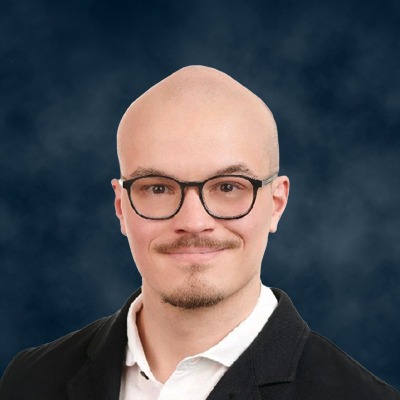
Computational DMPK Leader
Roche
Dr. Davide Bassani is a Translational PK/PD Leader and Computational DMPK Leader at Hoffmann - La Roche in Basel, Switzerland. He holds an MSc in Medicinal Chemistry and Technology and a PhD in Computer-Aided Drug Design from the University of Padua. Since joining Roche in 2022, he has led and supported initiatives spanning machine learning for secondary pharmacology and in silico approaches for rodent PK prediction. He now supports small-molecule programs across multiple disease areas within the Translational PK/PD and Clinical Pharmacology group. His work focuses on applying machine learning and computational methods to accelerate cycle times and improve decision-making across the discovery and development pipeline.

Director, Scientific Product
Simulations Plus
Michael Lawless, Ph.D.
has worked as a computational chemist since 1991.
Dr.
Lawless joined Simulations Plus, Inc.
in 2011 and is the Director of
Scientific Product. He was the lead scientist on the cyclooxygenase (COX) NCE project and the FDA/CFSAN and NIEHS collaborations.
Before joining Simulations Plus, Dr.
Lawless worked at Tripos, Inc.
where he gained experience in all areas of computer aided drug design, e.g.
QSAR modeling, structure- and ligand-based design, combinatorial chemistry library designs.
He also worked with clients on various projects including 5HT2a and 5HT2c inverse agonists, dopamine transporter ligands, and c-Src kinase inhibitors.
He was later promoted to Senior Team Leader of the Molecular Design group for Tripos Discovery Research, the combinatorial chemistry laboratory of Tripos.
He received his Ph.D.
in physical chemistry from the University of Arkansas.
This was followed by a two-year Robert A.
Welch Postdoctoral Fellow at the University of Texas at Arlington where he performed non-empirical and ab-initio calculations of organometallic complexes.
Speaker Title 3
Speaker Company 3Enter Text Here
Speaker Title 4
Speaker Company 4Enter Text Here
Speaker Title 5
Speaker Company 5Enter Text Here
Speaker Title 6
Speaker Company 6Enter Text Here
"Et harum quidem rerum facilis est et expedita distinctio!"
"Et harum quidem rerum facilis est et expedita distinctio!"
"Et harum quidem rerum facilis est et expedita distinctio!"
"Et harum quidem rerum facilis est et expedita distinctio!"
"Et harum quidem rerum facilis est et expedita distinctio!"
"Et harum quidem rerum facilis est et expedita distinctio!"
Sed ut perspiciatis unde omnis iste natus error sit voluptatem!
Sed ut perspiciatis unde omnis iste natus error sit voluptatem!
Sed ut perspiciatis unde omnis iste natus error sit voluptatem!